Education
Safe Food in Schools Project
Safe Food in Schools Project
Schools participating in the project
The Suthirat Yoovidhya Foundation has partnered with five schools across three districts in Nakhon Pathom Province—Bang Len, Nakhon Chai Si, and Phutthamonthon. Participating schools include Wat Bang Phasi School, Wat Rang Kam Yat School, Ban Khlong Sawang Arom School, Ban Lan Laem School, and Wat Mai Sukontharam School.
Project Objectives
The project aims to equip students with knowledge regarding food safety and organic farming practices. This is integrated through the "Moderate Class, More Knowledge" learning activities, designed to foster a deep understanding and awareness of consuming safe food and implementing eco-friendly agricultural methods.
Project Significance
"Guided by the belief that "Children are the future of the nation," supporting children to be healthy and grow appropriately for their age is fundamental to developing effective learning skills. This, in turn, cultivates high-quality citizens capable of driving national progress. We focus on the "Organic Heart: Safe Food in Schools" project to build awareness of food safety and its impact on both health and the environment. As schools are the primary foundation for a child's education, they serve as the vital starting point for nurturing a future generation that will continue to champion the cause of food safety.
Project Implementation
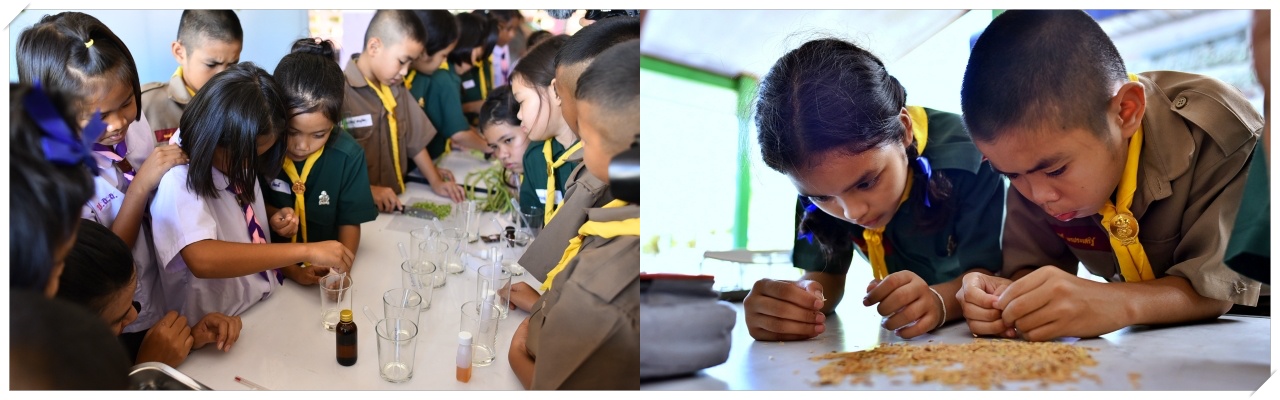
1. Community Food Source Survey: Conduct surveys of local food sources and provide nutritional education on vegetables.
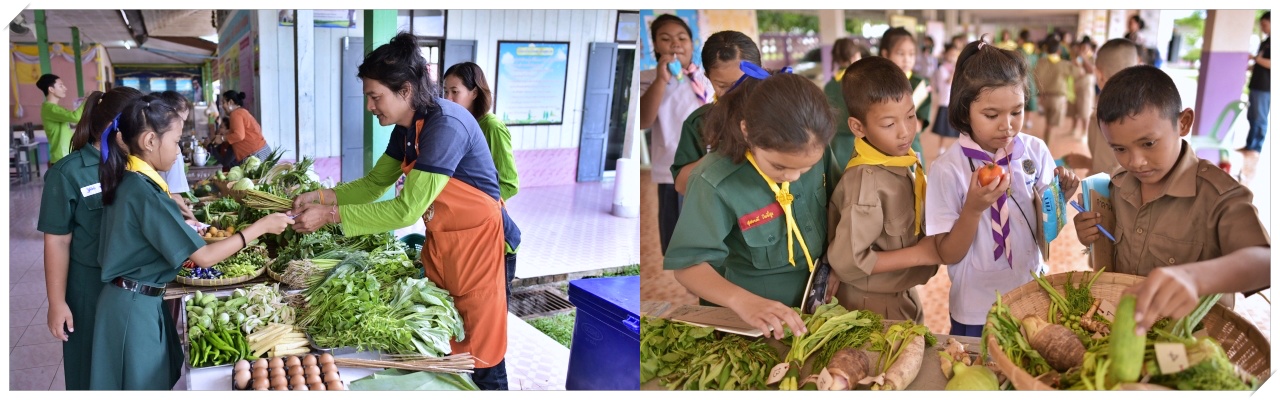
2. Food Literacy and Traceability: Learn how to read food labels and understand the origins of consumed food.
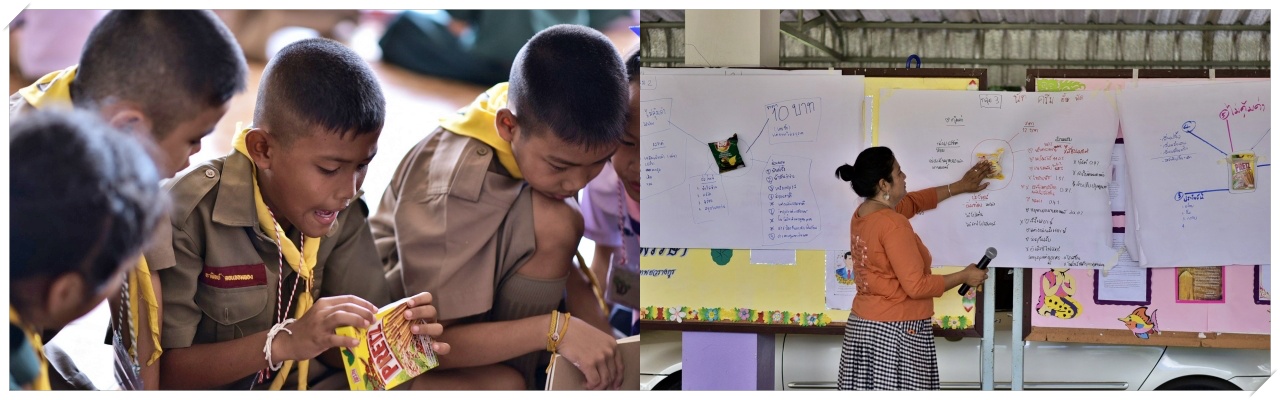
3. Organic Agroecology: Study organic farming ecosystems and the production of microbial activators.
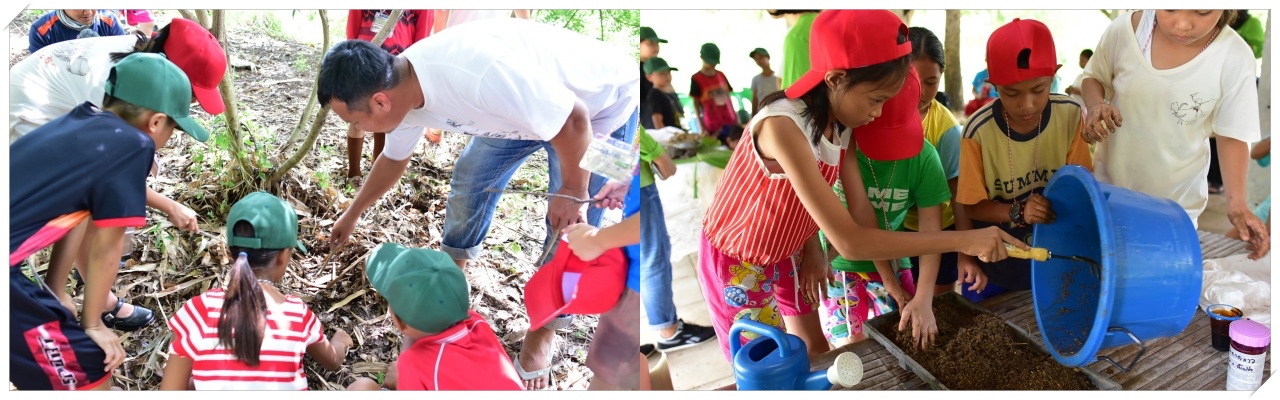
4. Composting Techniques: Learn the process of making organic compost.
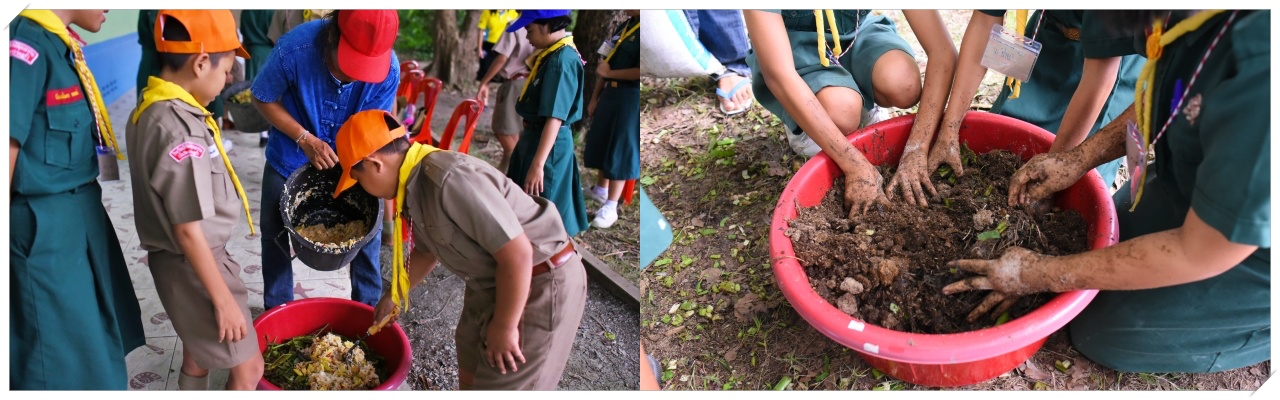
5. Rice Cultivation: Study rice varieties and the technique of parachute rice planting (Na Yon).
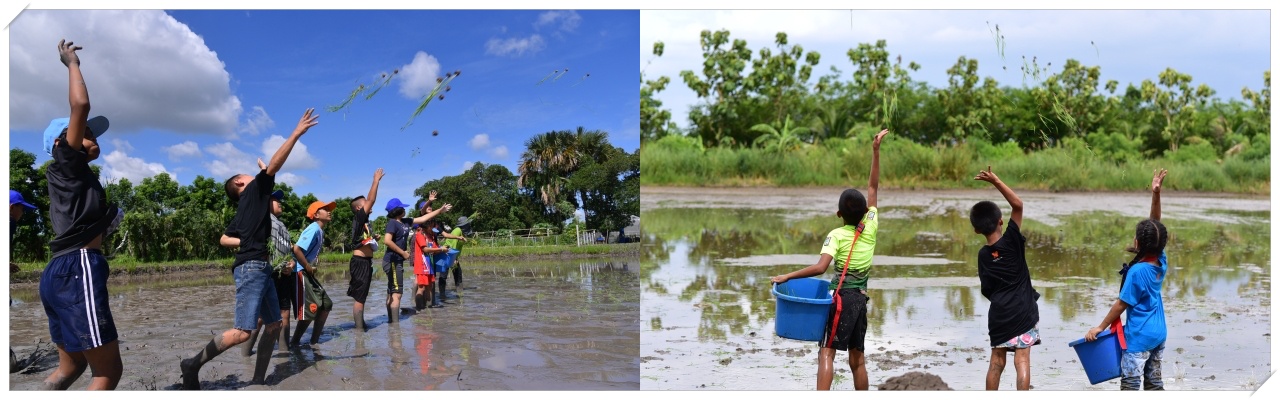
6. Vegetable Bed Preparation: Learn how to prepare soil and plots for school vegetable gardens.
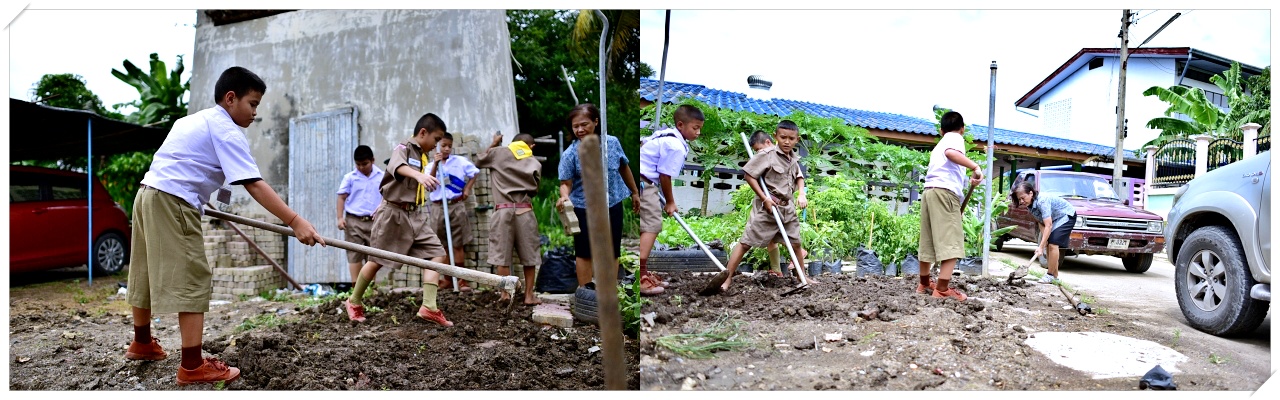
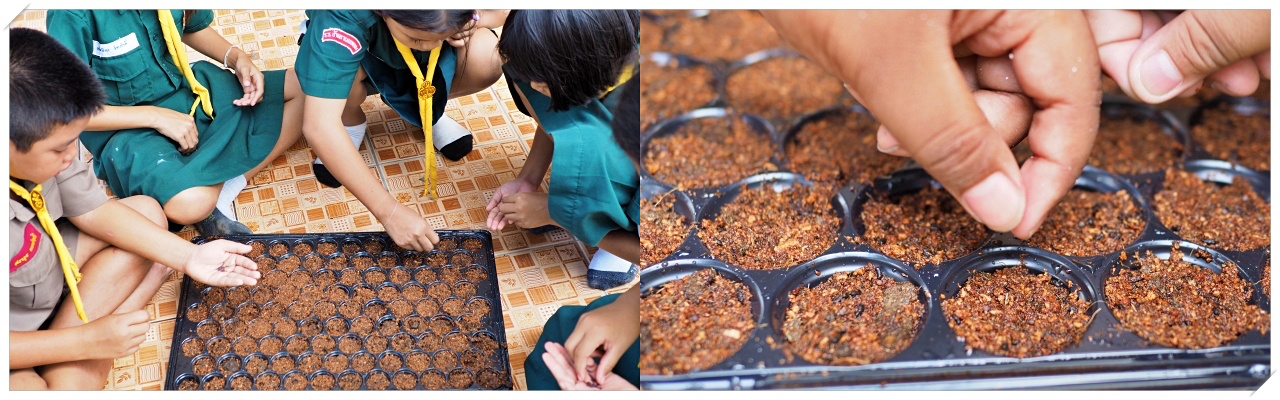
7. Seed Management: Study seed selection and seedling propagation techniques.
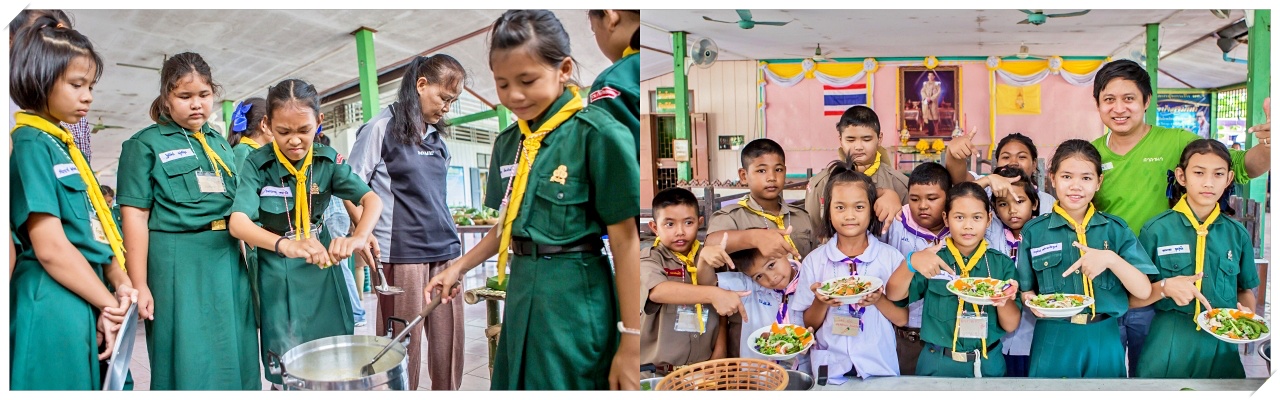
8. Food Processing: Learn various methods for value-added food processing.
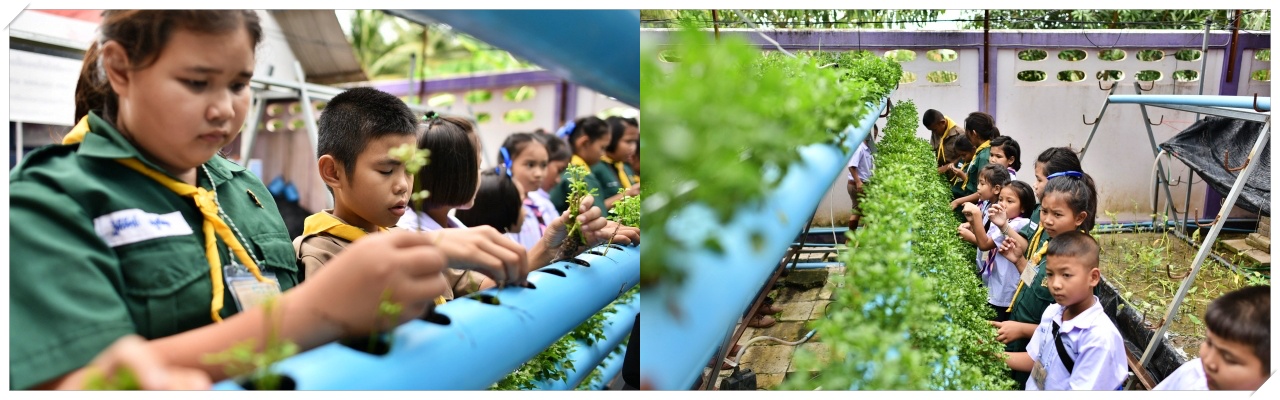
9. School Gardening: Engage in hands-on vegetable cultivation within the school grounds.
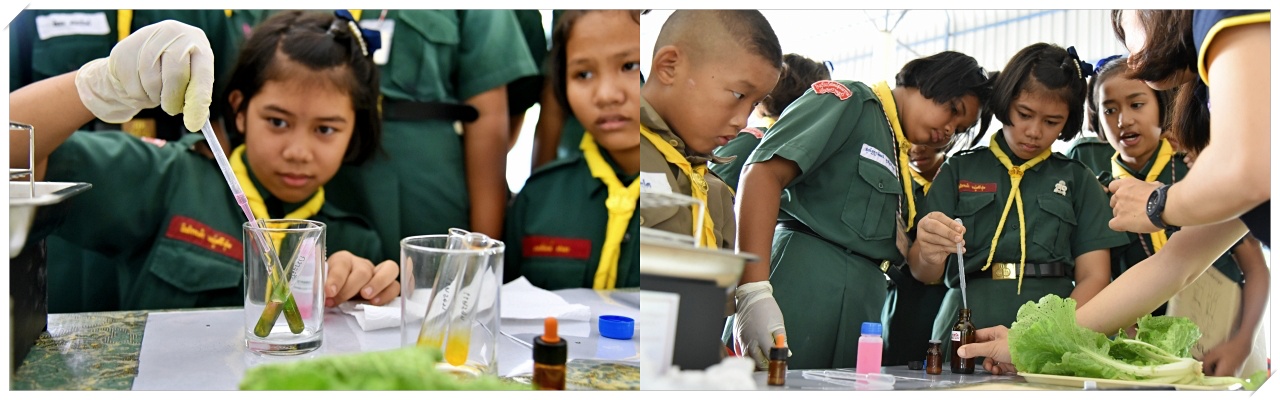
10. Chemical Contamination Testing: Learn how to detect chemical residues and contaminants in vegetables.
11. Learning Synthesis: Summarize the project outcomes and key takeaways.
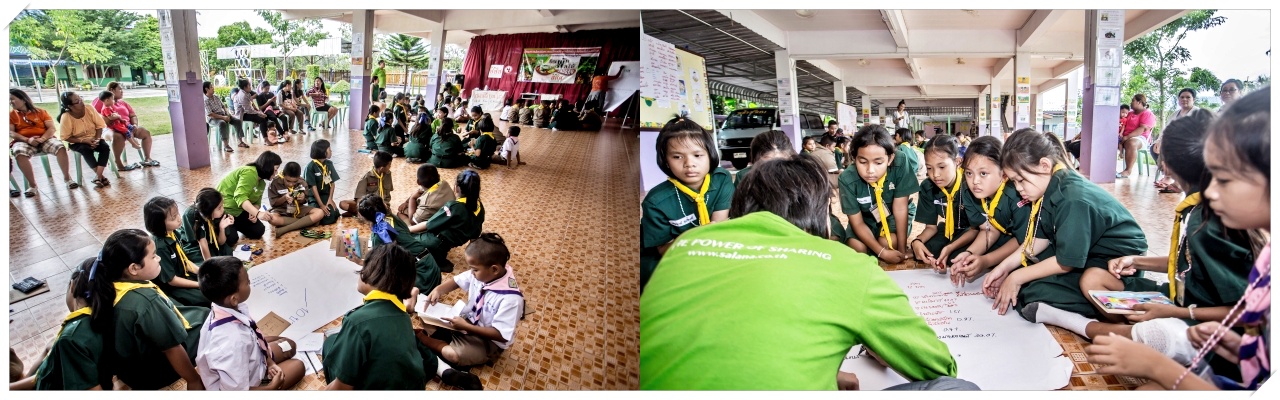
Safe Food in Schools Project
Schools participating in the project
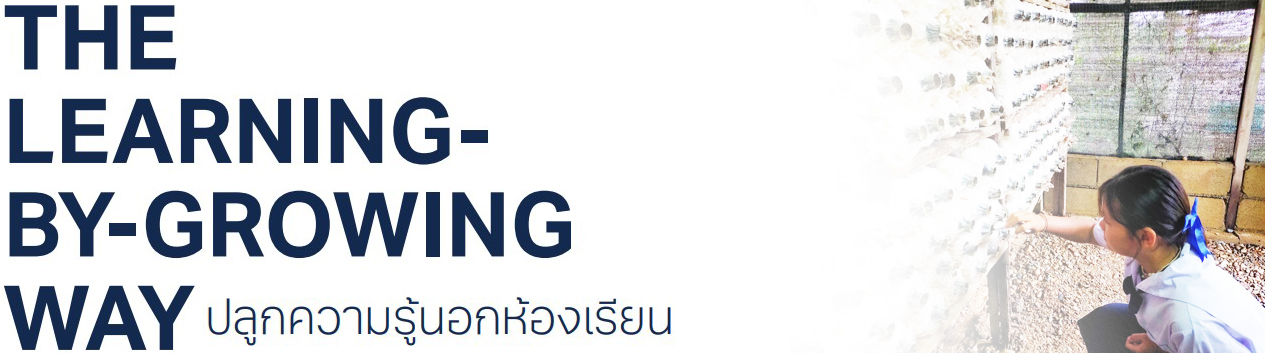
Safe Food Production in School Project, Baan Mae Lamung Wittaya School
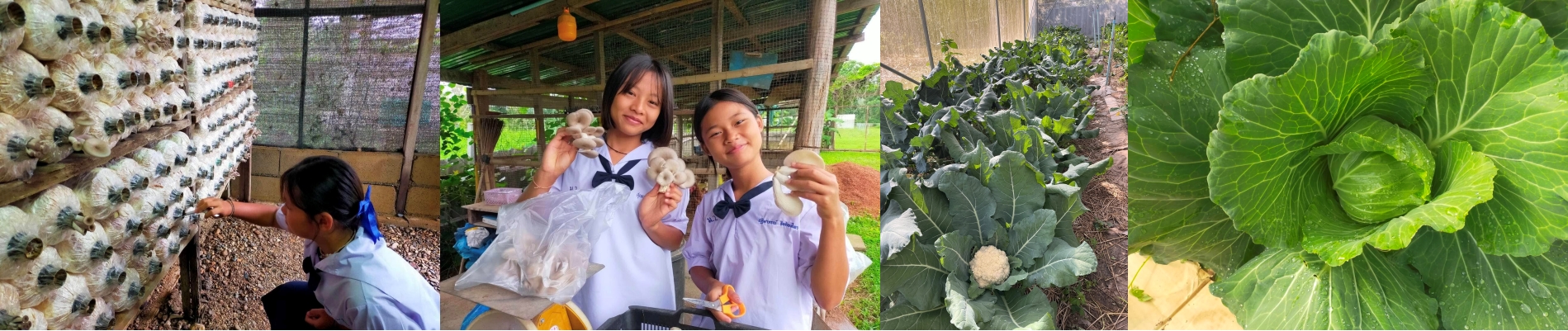
Baan Mae Lamung Wittaya School, Tak is one of the schools that receive support from the Suthirat Yoovidhya Foundation, with the goal of become a model school for organic farming. The school to develop and build safe food sources for consumption. It allows opportunities for school staff to learn and participate in organic farming activities through training provided by experts from the Suthirat Yoovidhya Foundation before beginning to improve the agricultural area.
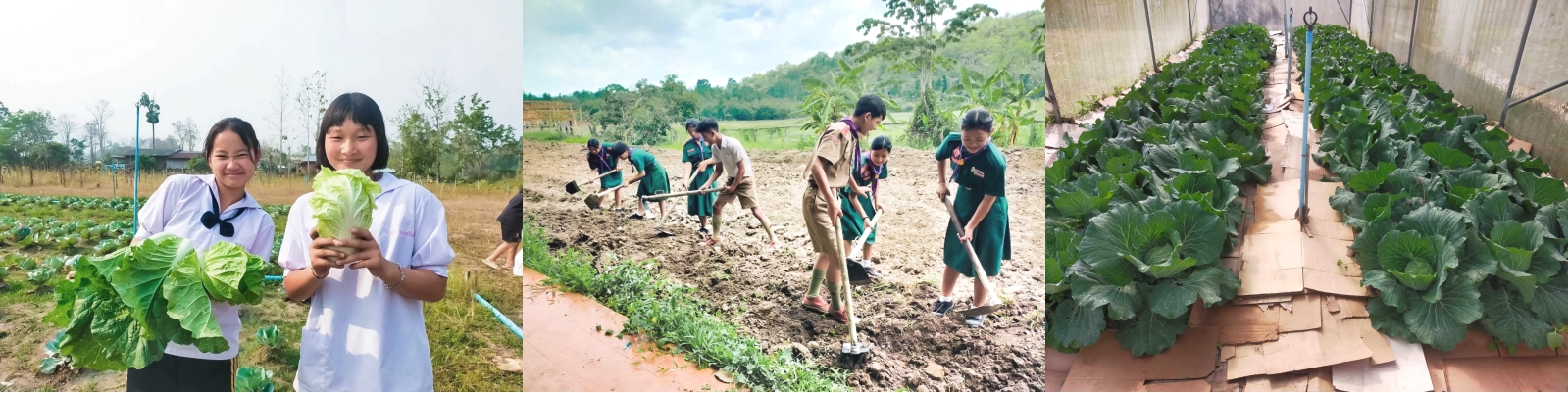
This was achieved by excavation of a 12-meter vast, 20-meter long, and 2.5-meter deep pond for water storage and fish farming. The curb soil was transformed into a space for planting and raising animals. Furthermore, there was an expansion of production and the development of sustainable activities for the surrounding community. The locals in the surrounding area were invited to participate in the improvement, including installing piping systems for planting, constructing coops for egg-laying chicken, modifying rice fields, and creating 4 greenhouses for vegetable cultivation.
Throughout the project, the school has received cooperation from a total of 137 4th - 9th grade students and 4 mentoring teachers, who have learned about agriculture by planting organic vegetables, cultivating oyster mushrooms, raising egg-laying chickens and fish, and cultivating chemical-free rice on a 3-rai farm. Responsibilities are divided according to grade levels, and the results have been satisfactory. The products can be harvested and used for the student's lunch in school, and some can be sold in the community. Meanwhile, the mentoring teachers also have the opportunity to visit and learn about activities such as making pyroligneous acid (wood vinegar), products from bamboo, alternative energy, and biogas from food waste and pig manure in Phrae. They intend to apply this knowledge in developing courses and teaching materials, and continue to promote organic farming. The ultimate goal is for the school to become a model for producing chemical-free and safe food for students to consume within the school, and a model for other nearby schools to learn from.