Education
Education Quality Enhancement Project
Education Quality Enhancement Project
At Wat Khao Yisan School and network schools, Yisan, Amphawa, Samut Songkhram.

Suthirat Yoovidhya FoundationIn collaboration with Wat Khao Yi San School (Samut Songkhram), Srinakharinwirot University, and CCF Foundation for Children and Youth.
Project Objectives
To establish an educational model tailored for small schools facing teacher shortages. This initiative aims to elevate the quality of education for students and bridge the gap in educational opportunities for underprivileged children in rural areas.
Project Significance
Education is the cornerstone of national development. Ensuring that youth have equitable access to high-quality education is vital for the long-term stability of the nation. Currently, many small schools face challenges in educational quality, which directly impacts the future of children, their families, and society at large.
Recognizing that education is the foundation for developing individuals, communities, and the nation, we are committed to implementing this "Educational Quality Enhancement Model" for small schools. Developing such a model is crucial for securing a better academic future for children and serves as a scalable blueprint for other underserved schools to follow.
Educational Initiatives (3 Key Projects)1. Small School Educational Quality Development Project: At Wat Khao Yi San School, Amphawa District, Samut Songkhram.
2. Scholarship Program for Underprivileged Children: In partnership with the CCF Foundation for Children and Youth.
3."Phuttha-Chit: Knowledge for Underprivileged Children" Project: In partnership with the CCF Foundation for Children and Youth.
Education Quality Enhancement Project
At Wat Khao Yisan School and network schools, Yisan, Amphawa, Samut Songkhram.
Project Implementation
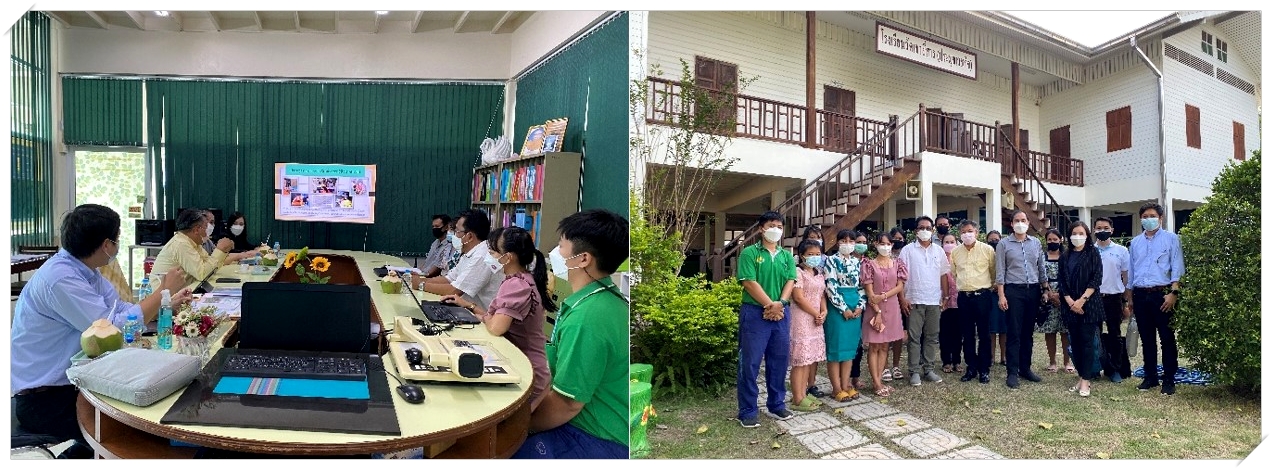
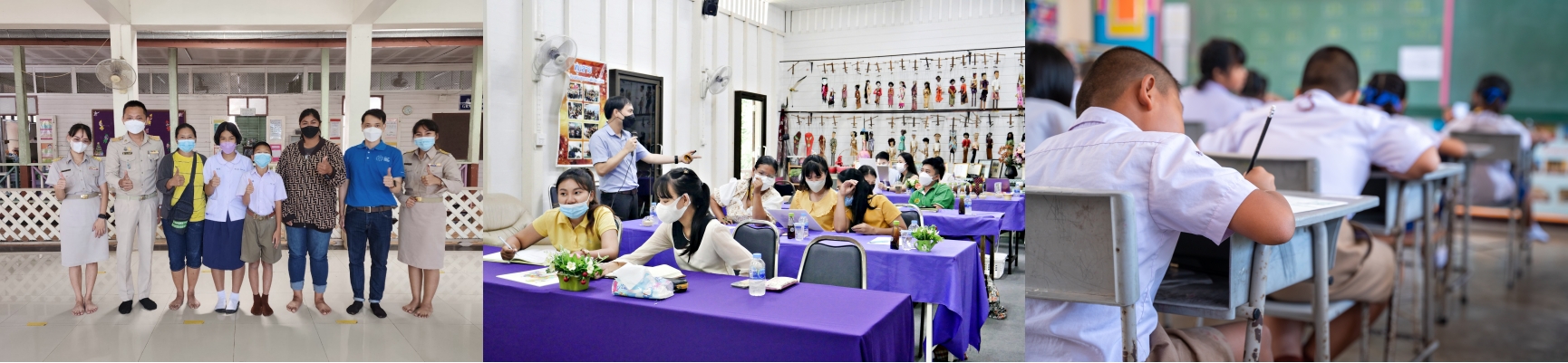
Small School Quality Improvement Project 2020This initiative has been carried out in collaboration with Wat Khao Yisan School, Yisan Sub-district, Amphawa District, Samut Songkhram Province since 2018. In 2020, an evaluation of past performance was conducted alongside an assessment of the school's and personnel's potential. Brainstorming sessions were held to strategize for effective and continuous educational quality improvement, aiming to establish the school as a model for small-school development. The 2021 action plan is defined as follows:

1) Establish collaboration with Srinakharinwirot University (Prasarnmit) to develop personnel and instructional models that align with the current situation and the school's specific context.
2) Support educational personnel in subject areas facing shortages.
3) Provide modern equipment suitable for the learning environment during the COVID-19 pandemic.
4) Grant scholarships to high-achieving students with financial needs, supporting them through to the completion of a bachelor’s degree.1.2 Support for Local Context-Based Vocational Skills:
Organic farming activities for in-school consumption and enhancing agricultural knowledge through Permaculture principles.
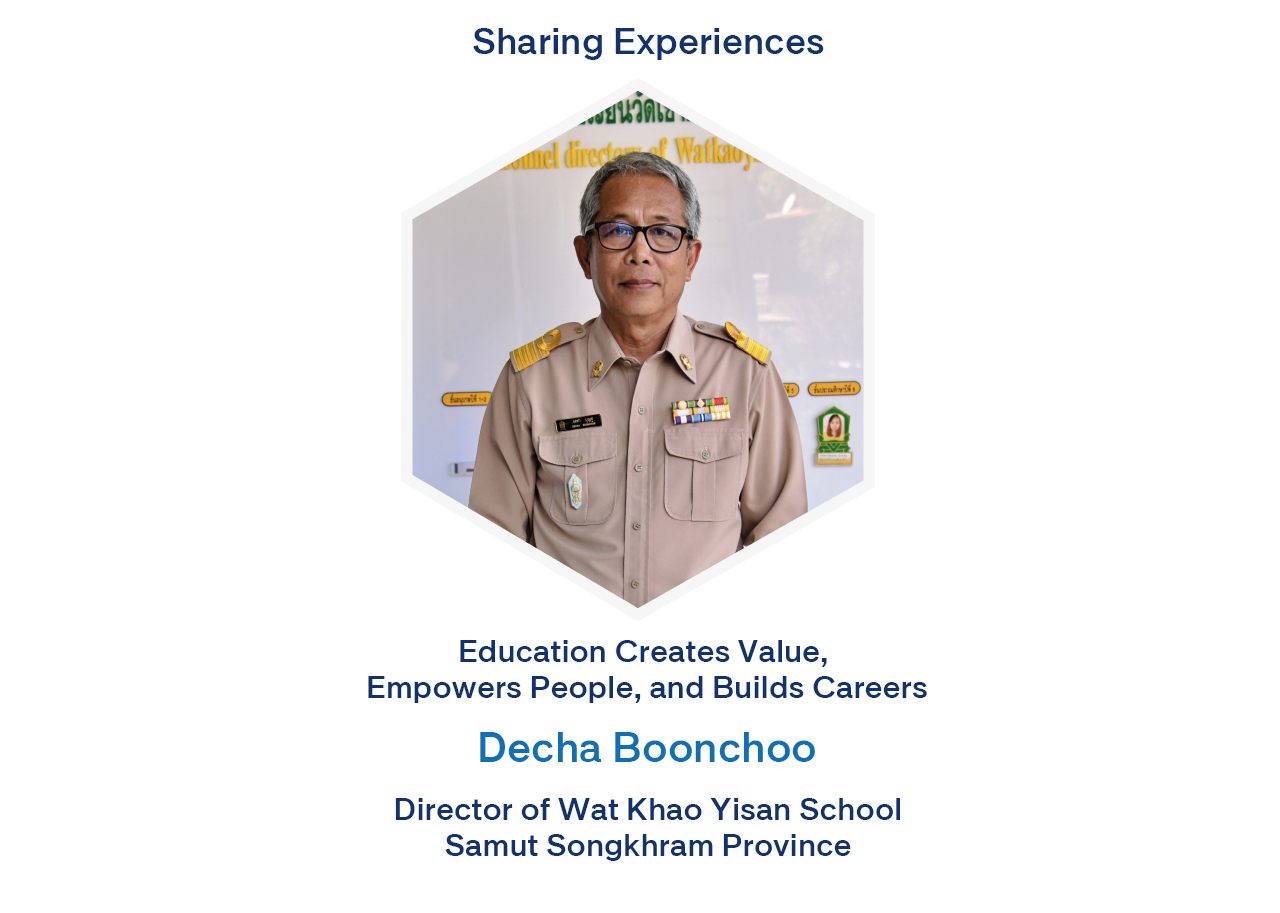
Q: What is your teaching approach to achieving O-NET scores higher than the national average?
A:We provide academic programs that enhance learning skills with a student-centered focus. However, what we emphasize most is instilling discipline and responsibility. We believe "study is study"-students must be attentive in class. We also incorporate skill-building activities to make learning engaging. Before exams, our teachers collaborate on intensive tutoring sessions by using past exam papers for practice. This helps students develop analytical thinking and practical skills, allowing them to approach the actual exam with confidence and proficiency.
Q: How does the development of students in small schools differ from that in large schools?
A : 1) limited teaching staff, 2) instructional technology, 3) budget constraints, 4) students' access to learning resources. While these are unavoidable, we manage them based on our available resources and personnel. With fewer teachers, our staff must be multi-skilled. If technology is outdated, we adapt by using creative learning materials available to us. Ultimately, when faced with limitations, effective management is the key.
Q : What is your perspective on students graduating from small schools who wish to pursue higher education?
A : As educators, we strive to support them in going as far as possible. Coordinating with various organizations to secure scholarships is one of a teacher's duties to help students reach their dreams. Furthermore, the school enhances student value by fostering vocational skills alongside classroom learning, ensuring they are well-rounded individuals.
Q : Could you speak about the Quality Improvement Project for students at Wat Khao Yisan School?
A :First, I would like to thank the executives of the Suthirat Yoovidhya Foundation for recognizing the importance of small schools. This project fills vital gaps by providing the personnel, equipment, and technology essential for modern instruction, enabling children to access diverse educational media. If successful, this project will simultaneously enhance the knowledge of both students and teachers. We are also honored to have academic consultants from Srinakharinwirot University (Prasarnmit) joining us. I would like to express my deepest gratitude for providing this opportunity to our school.